Sunday, April 19, 2015


Wildlife crimes and wildlife trafficking 
do not recognize national borders. 


African Wildlife was created to raise awareness about the perils facing our wildlife in Africa, due to poaching, trophy hunting, and habitat loss. 
A short while ago, someone tossed out an accusation toward us, that we had no right to meddle in the affairs of another country. We disagreed, as it appears that many countries are involved in perpetuating the wildlife abuses in Africa. 

Wildlife crime is the fourth largest global illegal trade. http://www.bbc.com/news/magazine-32151983 

Five myths about illegal wildlife trafficking http://www.washingtonpost.com/opinions/five-myths-about-illegal-wildlife-trafficking/2015/04/17/b43182fe-e3a1-11e4-b510-962fcfabc310_story.html 

The reason we are bringing any of this up, is that we are witnessing a trend in online activism, to vilify a country as being the sole aggressor in this war on wildlife. 
Saw this happen with the Taiji dolphin hunts in Japan. Not every Japanese citizen was responsible for this practice, yet frequently we would see vitriolic posts aimed at Japan as a whole. 

How are we to be taken seriously as activists and/or animal rights advocates, if we allow our outrage to turn us into nationalistic voices of hatred? 

The U.S.A. is the second largest global player in the ivory trade that threatens to render Africa’s elephants extinct. Yet again, and again, we are seeing horrific slanderous posts leveled at China and Vietnam. We have some incredible activists working within those countries to raise awareness about poaching elephants for tusks, and rhinos for horns. How can we say we support them, if we are slinging slurs at them for being of Chinese or Vietnamese descent? 

The U.S.A. does have a federal ivory ban in play, but it does not apply state by state. These articles explain in detail what role the U.S.A. plays in ivory trade. 

Citizens Spur States to Ban Trade in Ivory and Rhino Horn From Vermont to California, grassroots efforts drive state actions to protect elephants and rhinos. http://news.nationalgeographic.com/2015/04/150407-ivory-trade-vermont-usfws-victor-gordon-cities-nra/rptregcta=reg_free_np&rptregcampaign=2015012_invitation_ro_all 

Pianos and elephants clash at statehouse http://www.burlingtonfreepress.com/story/news/politics/2015/04/09/vermont-ivory-ban-bill/25548043/?utm_source=dlvr.it&utm_medium=twitter 

Complicit In Slaughter: Ivory Bill Has Deadly Loophole 
http://www.courant.com/opinion/op-ed/hc-op-daniels-ct-ivory-trrade-kills-elephants-0412-20150408-story.html 

When it comes to wildlife abuses, the U.S.A. is certainly not guilt free. We have much to answer for how we treat wildlife and wilderness in the United States. http://stopusdawsabuse.blogspot.com/p/predator-defense.html 

EXPOSED - USDA's Secret War on Wildlife https://www.youtube.com/watch?v=qSV8pRLkdKI&feature=youtu.be 

Published on Dec 1, 2013 In this award-winning film three former federal agents and a Congressman blow the whistle on Wildlife Services--a barbaric, wasteful and misnamed agency within the USDA--and expose the government's secret war on wildlife on the taxpayer's dime. Wildlife Services has been having their way for almost a century, killing over 100,000 native predators and millions of birds each year, as well as maiming, poisoning, and brutalizing countless pets. They have also seriously harmed more than a few humans. They apparently thought they were going to continue getting away with it. But with your help, we're not going to let them. Learn more and support our efforts to end America's war on wildlife at http://www.predatordefense.org/exposed. Exposed won the award for Best Wildlife Activism at the 2014 New York Wildlife Conservation Film Festival, the premier wildlife film festival in North America. 

You can take action here:

End taxpayer funded abuse, demand shelter reform.
http://petitions.moveon.org/sign/end-taxpayer-funded-abuse.fb50?source=c.fb&r_by=1235249


USDA and GMO. http://blog.seedalliance.org/2014/02/12/whos-responsible-for-gmo-contamination/ 

Ok, hopping off the soapbox now. 
Wildlife crimes and wildlife trafficking are everyone’s business, if they are a citizen of planet Earth. 
We all have a role to play in stopping it. Maybe we can achieve this, without becoming hateful towards all folks who live in a country that has achieved notoriety for wildlife crimes.

~African Wildlife

Wednesday, April 8, 2015


Cling to hope, cast aside despair.


We can do this folks, we can help our Africa to save her irreplaceable wildlife.

We are beyond boundaries now, and we work together due to the threat of global extinction.
When our family in Africa finds themselves fighting off the hideous onslaught of poaching elephants, rhinos, pangolins, and giraffes for the illicit wildlife trade, we know that we face two wounds with them.

First, we loose the brave souls of rangers who work to stop the wildlife poachers who slaughter elephant and rhinos for tusks and horns.
Every four days average, one beautiful human leaves our planet, trying to protect those animals who are hunted dead for ridiculous human need. Rhino horns don’t cure cancer, a hangover, or make for great sex. 

Wildlife crime - the rangers on the front line
https://www.youtube.com/watch?v=BfWStmtqrNI&feature=youtu.be

Secondly, we suffer an alteration of environment when so many keystone species have been lost.
Aside from moral loss, how will poaching rhinos into extinction affect our environment?
"The Problem of Poaching" https://theproblemofpoaching.wordpress.com/  

We all pay the piper.
No doubt that this is a war against wildlife, but also it is a war against humanity.
Africa loses with economic gains when poachers threaten ecotourism.

Now the poachers turn our applaud of ecotourism and activism concern against us when we share the photographs of our endangered African wildlife and disclose the location, unwittingly, as we wish to promote ecotourism in Africa, as an economic alternative to poaching.
bit.ly/1Cp6R5G  

Then we turn to the convoluted notion of trophy hunting an endangered species as conservation.
I promise not to swear here, as this one throws me off the cliff.
This is my country, and I tried to stop this by authoring a petition for the second black rhino trophy hunt import permit. That died on the vine.
https://secure.avaaz.org/en/petition/USFWS_Deny_trophy_hunt_import_permit_for_Namibian_black_rhino/?dxAkFfb&pv=5
No matter now, the decision was handed down by Director Dan Ashe for USFWS to go right ahead and green light hunts of Namibian Black Rhinos. 
USFWS said it was cool to go ahead and hunt two Grampa Black Rhinos and call it “conservation”.
Kill two members of an endangered species to conserve them? Surreal.
https://www.takepart.com/article/2015/03/26/us-gives-ok-hunter-kill-rhino

Wayne Pacelle, CEO of the @HSUS, thought otherwise, and I can not thank him enough for his eloquent words. I would have said something far more vulgar.

“It is the worst sort of mixed message to give a green light to American trophy hunters to kill rhinos for their heads,” Wayne Pacelle, president of The Humane Society, said in a statement. “When the global community is working so hard to stop people from killing rhinos for their horns, we are giving a stamp of approval to a special class of privileged elite to kill these majestic animals as a head-hunting exercise.”
https://www.takepart.com/article/2015/03/26/us-gives-ok-hunter-kill-rhino

Complicated politics?
You bet, baby.
But worth every moment of concern, every tear of grief.

Our folks in Africa, and our African wildlife Buddies, are counting on us to stop poaching and trophy hunting, so that the next generation of all life will include elephants, all remaining rhino subspecies, big cats, and pangolins.

We can work to Ban Ivory Sales in the USA.
http://wildlifeofafrica.blogspot.com/p/elephants.html

We can work to Ban Ivory Sales in the UK, and contact our Chinese embassies here:
http://www.adinternational.org/conservation/go.php?id=3922&ssi=14

on.fb.me/1IJA7sT
Thank you to Animal Defenders International @AnimalDefenders

We love Africa…… she is Nirvana, and it is our duty to step up, and speak out to protect her.

We stand with you, Africa.
Some of us in the USA are awake and working to make sure you are not alone in the challenge to save your beautiful wildlife from short sighted poachers.

Today, April 8, 2015, held promise.
Souls in New York believe that elephants, black rhinos, white rhinos, lions, and leopards should remain alive in Africa, rather than be dead trophies on a wall. Species on the verge of extinction need our voices, not our silence that will allow their lifeless mounted heads on a trophy hunter’s wall. 

http://friendsofanimals.org/news/2015/april/foa-drafts-bill-protect-five-african-species

https://www.newsday.co.zw/2015/04/08/another-blow-for-zim-wildlife-industry/

Thank you to Friends of Animals @FoAorg ,Michael Harris @WildAnimalLaw, Edita Birnkrant @EditaFoANYC for drafting and promoting this bill. Thank you to @TonyAvella @GeorgeLatimer37 for initiating this bill. Joyce Friedman of @HumaneSociety, bless you for endorsing it.

#AfricanBig5Bill 
The USA stands for life, not trophy hunting our beloved legacy of wildlife that belongs to our family in Africa

Wednesday, December 31, 2014


Happy New Year, 2015
We can end rhino and elephant poaching and canned lion hunts this year!
http://wildlifeofafrica.blogspot.com/2014/12/happy-new-year-we-at-african-wildlife.html


We at African Wildlife believe that with our efforts together, we will see a decline in elephant and rhino poaching, and the canned hunts of lions in Africa.

For starters, please follow these folks, they are doing the hard work and need for us to support them.
We will continue to add to this list, as there are so many dedicated people working to stop poaching and canned trophyhunts of lions. If we missed someone, no offense intended.

Thank you!

@AWF_Official  ~ www.awf.org
@cannedlion ~ www.kalahari-dream.com
@DSWT ~  www.sheldrickwildlifetrust.org
@iworryTrade ~ www.iwory.org
@EleRhinoMarch ~ www.march4elephantsandrhinos.org
@The_GRAA ~ www.gameranger.org
@IAPF ~ www.iapf.org
@IAWF
@paulakahumbu
@SavingSurvivors
@VETPAW ~ www.vetpaw.org
@WCSTanzania ~ www.wcstanzania.org

Saturday, December 27, 2014


This is inconceivable.

Reposted from:

Cops jail rhino rangers


December 27 2014 at 10:14am 
By Simon Bloch. 
Rhino1111
Independent Newspapers.

Durban - KwaZulu-Natal conservation authorities have reacted with fury and disbelief after the SAPS arrested three members of a crack anti-rhino poaching unit (APU) for the alleged murder of a suspected poacher on Christmas Day.

The three men had cancelled their celebrations to protect rhinos at uMkhuze Game Reserve in the iSimangaliso Wetland Park in Zululand, while other staff members were given the opportunity to spend the day with their families.

Acting chief executive of Ezemvelo KZN Wildlife, Dr David Mabunda, told The Independent on Saturday he was “surprised the SAPS decided to charge the field rangers who killed a suspected poacher when their lives were in danger.

“I plan to meet with the national police commissioner, General Rhiya Phiyega, to set up a protocol to handle these matters. Poachers are getting away with murder, while law enforcement agencies are at war with each other. The arrest of the rangers doesn’t make sense. I’m furious.

“We will allow the law to take its course and we will spare no resources on providing legal support to our rangers and also emotional support by referring them to counselling once they are released.”

iSimangaliso chief executive, Andrew Zaloumis, echoed Mabunda’s words and said his organisation would also take the matter up with the SAPS provincial Commissioner Lieutenant-General Mmamonnye Ngobeni.

“Field rangers are at the hard-edge of anti-rhino poaching work and are faced with an increasingly difficult task; more so when seemingly arbitrary arrests of those who have had to actively engage with poachers are made.

“Full support is given by iSimangaliso to Ezemvelo KZN Wildlife field-rangers undertaking anti-rhino poaching work in the Park, who are operating within the law, follow established procedures and are designated environmental law enforcement officials (green scorpions).

“An attorney briefed by iSimangaliso Wetlands Park Authority and Ezemvelo KZN Wildlife, yesterday succeeded in launching an urgent bail application for the arrested staff.”

The application will be heard in the Ubombo Magistrate’s Court this morning.

Colonel Jay Naicker of the SAPS’ KZN media-centre said: “Jozini police attended to the incident at about 2.30pm on Christmas Day.

The three rangers were arrested for murder. Police seized three R1 rifles.

“It is alleged by the rangers at the game reserve that the man was poaching in the reserve, when he was killed by guards while fleeing. It is alleged he was unarmed and had surrendered when he was killed”.

Asked how a dead man would be able to tell detectives he had surrendered before he was shot, he said: “Obviously we will have to wait for the matter to be fully investigated and the docket presented in court.”

According to Ezemvelo’s spokesman, Musa Mntambo, the rangers were arrested before a thorough investigation.

“We opened our own case of poaching with the SAPS only yesterday and we expect justice will prevail this morning.

“On Thursday, field rangers on patrol near Ephaki encountered an armed group of about three suspected poachers who were carrying an axe and a heavy-calibre rifle. The poachers fled, and the rangers pursued them.

“The uMkhuze anti-poaching unit was mobilised, and responded by closing all escape routes. Two APU members walking toward the park came in contact with three suspected poachers, and a shoot-out with the suspected poachers followed.

“During armed contact, one suspected poacher was killed, and the SAPS was notified.”

This year ranks as the darkest for South Africa’s rhino population.

Last year, 1 004 were reported killed.

By the time the poaching books are closed on December 31, the tally could exceed 1 200 for 2014, in the country alone.

Field rangers and anti-poaching units were on high-alert on Thursday, following the discovery of a poached black rhino cow and her calf at the Zululand Rhino reserve on Christmas Eve.

The young calf is believed to have died of natural causes. - The Independent on Saturday

Friday, December 26, 2014


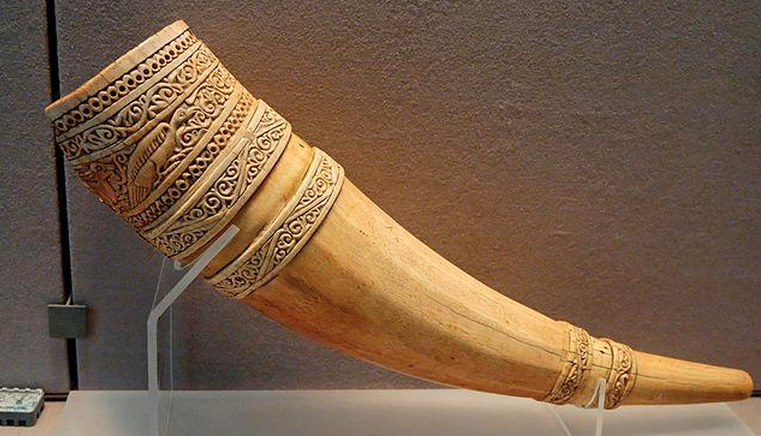
One artist’s point of view about ivory carvings, ivory artifacts, and elephants.


If you love elephants, then you are already aware of the poaching epidemic we face in Africa that is threatening to wipe our largest Earth mammals off the planet into the tragic realm of extinction.

If you happen to be an artist, then you know the reason for this is use of a substrate to carve from.
I’ve never carved into an ivory tusk, and I never will.
We have clay, wood, hydrocal, marble, plaster, and vegetable ivory, tangua, that can be used to carve art forms.

There is no justification to drive a species to oblivion, in order to create a sculpture, a piece of jewelry, or a gun handle. None, other than human greed, and an artificially inflated market.

My personal opinion is that if we can halt poaching by destroying so called “priceless artifacts” carved from ivory, then it is our most basic human decency to do so.

When we reach the tipping point of elephants extinct in the wild, and have the misfortune of living in that altered environment without that keystone species, that ivory artifact sitting on a shelf in a collector’s vault or a museum will not save all the species who exist in the unhealthy environment created by removing an essential element.

Ban ALL ivory sales, and remove the demand for poaching.
#BanIvorySales in the USA ~ Petitions, email contacts for actions to take here. Thank you!
http://wildlifeofafrica.blogspot.com/p/elephants.html

Image courtesy:
www.eliteauction.com
Hand carved ivory elephants tusk. Fully relief carved design depicting a group of 6 elephants graduating in size walking towards a tree


Inside the NRA’s bizarre battle to prevent a ban on the sale of ivory in the US
Poachers are slaughtering elephants by the tens of thousands, but the NRA is more worried about American gun collectors.

December 23, 2014  |  
The National Rifle Association is fighting a new ban on the sale of ivory in the United Sates, meant to protect Africa’s threatened wildlife, because they say it would be disastrous for gun owners.

The NRA is backing new legislation in Congress that would roll back the ivory ban and prevent any regulations under the Endangered Species Act from disrupting or restricting the sale of lawful ivory. The Fish and Wildlife Service has already made an exception to the ban for musicians, which allows them to have a travel exception for antique instruments made with ivory. However, the exception does not extend to the sale of antique instruments made with ivory.

Chris Cox, executive director of the NRA’s lobbying arm, told news site The Hill earlier this year [3]
http://thehill.com/regulation/administration/212037-nra-warns-ivory-ban-will-make-gun-owners-criminals-overnight , “While the goal of restricting illegal commerce in endangered species is laudable, the effects of the ivory ban would be disastrous for American firearms owners and sportsmen, as well as anyone else who currently owns ivory.” 

Many antique guns made in the 1800s and early 1900s are prized by collectors for their ivory grips.

Others gun rights groups went as far as to claim that the new ivory ban infringes on the Second Amendment’s right to bear arms. 

"For those of us who are concerned that this administration is trying to take away our guns, this regulation could actually do that," said Sen. Lamar Alexander (R-Tenn.) after introducing the Lawful Ivory Protection Act in the Senate. The bill is currently under review by the Committee on Environment and Public Works. A similar bill was also introduced in the House of Representatives.

“See, this is why we can’t have nice things. Like elephants,” Daily Show host Jon Stewart said of the Senate bill. “So I guess the only things that should be hurt here are giant land mammals and victims of African terrorism.”

The new ivory ban is meant to protect endangered elephants and rhinos in Africa, where poachers are slaughtering the animals by the thousands for their ivory and selling it on the black market. China is the largest market for illegal ivory, where it is considered a status symbol for wealthy Chinese. The United Sates is the world’s second-largest market for illegal wildlife artifacts.

Poachers have killed 100,000 Central African elephants in the last three years, resulting in a 64 percent drop in the animal’s population, according to a recent academic study published in Proceedings of the National Academy of Sciences [4]. 
Meanwhile, the government of South Africa reported at least 1,000 rhinos were killed by poachers in South Africa last year.

Much of the money earned through black market ivory sales is used to fund armed extremist groups like Boko Haram in Africa.

Imported ivory has been banned in the United States since 1989. But earlier this year, the Fish and Wildlife Service introduced a more restrictive ban on the sale of ivory, which would require merchants selling antiques made with ivory to prove beyond any doubt that the ivory was imported before the 1989 ban. 

The NRA said that the new, more restrictive ban would do nothing to protect endangered elephants and would only make otherwise law-abiding gun collectors into criminals.


Prince William, destroying ivory art won’t stop poaching.
http://motherboard.vice.com/blog/prince-william-destroying-ivory-art-wont-stop-poaching


February 17, 2014 // 12:11 PM EST

I’m all for symbolic actions to show resolve in the face of tragic environmental issues, but there’s good symbolism and there’s pointless symbolism. In the case of Prince William’s desire “to see all the ivory owned by Buckingham Palace destroyed"—expressed in private to Jane Goodall, but now reported in The Guardian, http://www.theguardian.com/uk-news/2014/feb/17/prince-william-buckingham-palace-ivory-destroyed The Dodo, https://www.thedodo.com/prince-william-pledges-to-dest-432979376.html?xrs=Dodo_FB and elsewhere—we have an example of pointless symbolism. 

Recently, we’ve seen a number of high-profile burnings of whole elephant tusks by governments, http://www.huffingtonpost.com/2013/06/21/philippines-ivory-burn-tusks-destroyed_n_3478539.html the tusks themselves either having been seized from poachers or from back stockpiles. There have also been huge ivory crushes http://motherboard.vice.com/blog/chinas-historic-ivory-crush-is-a-good-first-step-but-only-that in several countries.
http://motherboard.vice.com/blog/frances-ivory-crush-is-more-proof-that-wildlife-trafficking-is-a-global-problem The destruction both takes ivory off the lucrative black market, as well as attempting to send the message that governments are serious about stopping poaching. Such efforts may well elevate the public awareness of the dire state of the African elephant, being driven rapidly to extinction by the desire for its tusks in the black market of Southeast and East Asia. It’s a nice photograph, a nice story, and decent symbolism. 

But in the case of Buckingham Palace’s collection of ivory, we’re not talking about ivory tusks or trinkets, we’re talking about, to use The Guardian’s description, “about 1,200 artifacts dating back hundreds of years.” In other words, over a millennium of art history. 

Elephant poaching http://motherboard.vice.com/blog/despite-huge-busts-elephant-poaching-has-reached-record-levels--2 is an abomination, full stop. Governments around the world, both in the countries where poaching occurs and in the black markets where the ivory is worked http://motherboard.vice.com/en_ca/blog/vietnam-is-the-world-s-worst-for-wildlife-crime into finished products, are not doing enough to stop the slaughter; there can be no doubt about that. It will be a dark stain on the history of human civilization if we cannot collectively rally to stop this trade. 

However, destroying the legacy of human creativity embodied in the Buckingham Palace collection serves no purpose. Doing so would not, as conservationist Paula Kahumbu http://paulakahumbu.com/ says, “be a demonstration of them putting their money where their mouth is,” nor would it, I imagine, “help Britons hand in their ivory, illegal or legal.” 

It’s one thing, as Prince Charles has apparently done, to remove items in the collection of his homes from public view. Doing so may help, in some small way, distance the linking of ivory objects with wealth, power, and prestige in the minds of potential buyers of either new or antique works in ivory. If Buckingham Palace wishes to do that, it would be a far more sophisticated action than that of destroying outright the objectionable objets d’art. 

In a way, the destruction of existing antique ivory works of art—those created in a time when African elephants were not on the brink of extinction—is some weird form of knee-jerk iconoclasm. It’s as if we are now so horrified by the state of affairs we’ve created vis-a-vis elephants that to show our disgust with our ineptitude at preventing poaching we will attempt to erase the fact that we ever thought using ivory was acceptable. 

Should we also destroy objects created in times of slavery? The near entirety of most museums' Roman collections would have to go, as well as the artistic and cultural legacy of a great many societies. Should we destroy artifacts from the period of westward expansion in the United States associated with the de facto attempted genocide of Native Americans? Should we destroy art objects created in colonized nations by at times brutalized people? Will we in the coming decades all destroy old smartphones and gadgets containing conflict minerals to show our disgust with economic exploitation and environmental degradation? 

We’re obviously not going to do any of those things. Nor should we go around in some purge of ivory antiques, turning in family heirlooms and cultural relics. The visual legacy of practices we now find objectionable is something worth preserving, even when we find it disturbing.  

Good on Prince William for carrying on his father’s legacy on issues of conservation by helping with campaigns to end poaching of both elephants and rhinos. http://www.telegraph.co.uk/news/uknews/prince-charles/10626071/Prince-Charles-and-Prince-William-unite-for-anti-poaching-video.html Take the royal family’s ivory out of public view. Box it up for a time if you must. In a few decades, when either the African elephant will have been driven extinction by our inaction today, or when we will have stopped the illegal ivory trade, take the ivory out of its boxes for re-display. It will then either be a grim reminder of our failure or an emblem of our success. 

TOPICS: elephants, ivory, ivory crushes, environment, poaching


Sunday, November 30, 2014


We who wish to keep the ivory ban in place can use the same contact numbers in the article published by the NRA, wishing to overturn the USA ivory ban.
Call and say "please keep the ivory ban in place, in order to save our elephants from being driven into extinction." 
Elephants or antique ivory gun handles....this is a no brainer.


All contact info to call and support the ivory ban:
http://wildlifeofafrica.blogspot.com/2014/11/we-who-wish-to-keep-ivory-ban-in-place.html

You can read more about the ivory ban, sign petitions,  and find your state representative and senator contacts here, both email and phone numbers:
http://wildlifeofafrica.blogspot.com/p/elephants.html
http://wildlifeofafrica.blogspot.com/p/ivory-sales-pre-ban-legal.html


Reposted from NRA~ILA:

Obama Administration's Proposed Ban on Domestic Sale of Ivory Could Impact Gun Owners

Posted on February 28, 2014

On February 11, 2014, the White House announced a National Strategy for Combating Wildlife Trafficking.  One of the many aspects of the National Strategy is to ban the commercial trade of elephant ivory inside the United States. The Administration plans on banning the domestic sale of legally owned ivory in an upcoming rule.

In response to the White House's announcement, the U.S. House of Representatives Foreign Affairs Committee held a hearing titled, "International Wildlife Trafficking Threats to Conservation and National Security" (Hearing may be viewed here).  http://www.nraila.org/news-issues/articles/2014/2/obama-administrations-proposed-ban-on-domestic-sale-of-ivory-could-impact-gun-owners.aspx

During this hearing, Director Ashe confirmed the NRA's concerns regarding the domestic trade and sale of ivory inside the United States.  Director Ashe stated if you own a firearm that contains any amount of ivory that is less than 100 years old, you will not be able to sell this firearm.     
Why does this matter to every NRA member? This is another attempt by this anti-gun Administration to ban firearms based on cosmetics and would render many collections/firearms valueless.  
Any firearm, firearm accessory, or knife that contains ivory, no matter how big or small, would not be able to be sold in the United States, unless it is more than 100 years old.  This means if your shotgun has an ivory bead or inlay, your revolver or pistol has ivory grips, your knife has an ivory handle, or if your firearm accessories, such as cleaning tools that contain any ivory, the item would be illegal to sell.

Please email and call the White House at 202-456-1111 and email and call the Fish and Wildlife Service at 1-800-344-9453, to let them know you oppose the ban on commercial sale and trade of legally owned firearms with ivory components. 

Also, please call your U.S. Representative at 202-224-3121 and tell them the same. 

Your actions today may determine if these firearms that contain ivory will be banned.  We will continue to keep you informed as this issue progresses.

Tags:"National Strategy for Combating Wildlife Trafficking", Ivory, fish and wildlife service, gun ban


Tuesday, November 25, 2014


Collateral Damage: 
Ivory Ban’s Effects on:
 Collectors, Museums, Musicians, and the Art Trade


Oh, baby......
Ok.
Here we find ourselves swimming in the deep end of the blood pool.
Mr. Kevin P. Ray is concerned, it appears, with the fact that a total ban on ivory will effect collectors, museums, musicians, and the "art trade".
Hmmm.
Wonder though, if he and said "collectors, museum curators/ staff, musicians, and art dealers" would be willing to anti up a bone from their bodies in order to keep said industries profitable?

After all, that is what we ask of our endangered elephants, who appear to be heading for extinction, in order to pluck their tusks from their bodies. Too bad it costs the elephants their lives, and leaves their offspring as orphans, right?
After all, we have an art trade to consider, true?

The heck with that noise!!!
We need a 100% Ban on ivory...globally. In order to allow our elephants to continue to roam their Earth home, Mr. Ray.

Collateral Damage: Ivory Ban’s Effects on Collectors, Museums, Musicians, and the Art Trade


Reposted from:
http://www.gtlaw-culturalassets.com/2014/11/collateral-damage-ivory-bans-effects-on-collectors-museums-musicians-and-the-art-trade/

Written by:
http://www.gtlaw.com/People/Kevin-P-Ray

Greenberg Traurig, LLP
Home Contact
Cultural Assets
Legal Analysis and Commentary on Art and Cultural Property

A GREENBERG TRAURIG BLOG
Home > Art Ban > Collateral Damage: Ivory Ban’s Effects on Collectors, Museums, Musicians, and the Art Trade

Collateral Damage: Ivory Ban’s Effects on Collectors, Museums, Musicians, and the Art Trade
By Kevin P. Ray on November 24, 2014
Posted in Art Ban, Stolen Art
Elephant Tusks


Earlier this year, in response to concerns that poaching of African elephants is rapidly driving the species to extinction, the U.S. federal government tightened restrictions on the import, export, transfer, and sale of African elephant ivory and rhinoceros horn.[1] The revised restrictions followed on President Obama’s July 2013 executive order http://www.whitehouse.gov/the-press-office/2013/07/01/executive-order-combating-wildlife-trafficking committing the U.S. to increase its efforts to halt wildlife trafficking. As reported http://www.nbcnews.com/science/environment/saving-elephants-state-bans-ivory-trade-gather-steam-n179121 by the Wildlife Conservation Center, “[t]here were an estimated 1.2 million African elephants in 1980, but now the population is down to less than 420,000. . . . For forest elephants, a separate species from the savannah elephant, the news is worse. Ten percent of the population was killed in 2012, and another 10 percent in 2013. . . . With fewer than 100,000 left, extinction could be only 10 years away.” Wildlife conservationists argue that a complete ban on the sale of ivory is necessary, and is the only way to stop poaching of elephants.
http://news.nationalgeographic.com/news/2014/08/140829-elephants-trophy-hunting-poaching-ivory-ban-cities/ Some have suggested that a complete ban on ivory actually facilitates further looting and an illicit ivory market, and have urged the creation of a limited, regulated, licit market in ivory.
http://voices.nationalgeographic.com/2014/09/15/opinion-can-elephants-survive-a-continued-ivory-trade-ban/

The new rule’s most controversial change has been its limitation of the antique exception to the general ban on ivory, which previously allowed commercial and non-commercial import, export, transfer and sale of objects at least 100 years old that were either made of ivory or included ivory elements. The original version of the amended rule that was announced http://www.fws.gov/policy/do210.html in February eliminated the antiques exception in all commercial contexts and substantially limited it in non-commercial contexts. New York http://www.wcs.org/press/press-releases/ny-state-ivory-ban-passes.aspx and New Jersey
http://www.njleg.state.nj.us/2014/Bills/A3500/3128_I1.HTM have similarly tightened their existing restrictions on the trade in http://www.state.nj.us/governor/news/news/552014/approved/20140805c.html and transfer of ivory.
http://www.businessweek.com/articles/2014-08-18/new-yorks-ivory-ban-has-antique-shops-threatening-to-flee
California, Maine, and Hawaii are expected to follow suit.
http://www.latimes.com/business/la-fi-ivory-bans-20140902-story.html

Response to this change was swift, http://www.nytimes.com/2014/03/21/arts/design/new-limits-on-ivory-sales-set-off-wide-concerns.html?_r=1 and, from many sectors, strongly negative, questioning what the new rule would mean for the trade in art, antiques, musical instruments, http://americanorchestras.org/advocacy-government/travel-with-instruments/endangered-species-material/ivory-ban-impact-on-orchestras.html antique guns, http://thehill.com/regulation/214590-senators-seek-answers-on-ivory-ban and other objects either made of ivory or containing ivory elements. http://hyperallergic.com/134867/museums-musicians-and-antique-dealers-resist-harsh-new-ivory-restrictions
Collectors, museums, orchestras, and musicians pointed out that the new rule would ban much long-standing collecting and cultural exchange activity. The policy http://www.fws.gov/policy/a1do210.pdf  was modified in May, in response to these objections, to clarify and provide some protection for non-commercial cultural activities. Despite that modification, many in the arts community remain concerned that even for activities that are apparently authorized by the modified rule, the procedures and actual implementation remain uncertain. When antique objects of cultural and historic importance are at issue, many are understandably wary of placing those objects at risk of being detained or perhaps seized and destroyed.

Critics find even the revised rule to be over-broad, jeopardizing our understanding of the past by imposing current standards of behavior, effectively editing the past to suit contemporary tastes. “It is wrong, and foolish, to project our scruples on to the past,” Jonathan Jones wrote in The Guardian.
http://www.theguardian.com/artanddesign/jonathanjonesblog/2014/may/15/ivory-elephant-artworks-banned-cultural-legacy ( Editorial addition ~ Really, Jonathan? So would we have also been wrong to suggest that human slavery need have been abolished as well? Slavery was also legally accepted as a moral and ethically acceptable construct in history. Thank God for all of humanity that concept was abolished, and that we have moved on in time since then. )
“There is no reason to abhor the wonderful masterpieces created by past generations with a technique we no longer ‘approve of,’ or to deny ourselves the pleasure of these artistic marvels. This is why American antiques dealers are right to demand clarification of current restrictions that seem to potentially ban the sale of bona fide historical objects.”

On July 10, companion bills were introduced in the Senate (S. 2587)
https://www.congress.gov/bill/113th-congress/senate-bill/2587/text and House of Representatives, (H.R. 5052),  https://www.congress.gov/bill/113th-congress/house-bill/5052?q=%7B%22search%22%3A%5B%22hr5052%22%5D%7D the “Lawful Ivory Protection Act of 2014”, which would prevent the new ivory rules from going into effect. The proposed bills would amend the Endangered Species Act (discussed below) to prohibit any regulation going into effect after Feb. 24, 2014 that would (i) prohibit or restrict the possession, sale, delivery, receipt, shipping, or transportation of elephant ivory that has been lawfully imported; (ii) change any methods of, or standards for, determining if ivory has been lawfully imported; or (iii) prohibit or restrict the importation or possession of ivory that was lawfully importable or possessable on that date.

Amid this storm over the new rule, it is important to attempt to clarify for collectors, museums, musicians and others what activities are permitted under the current rule and what activities are forbidden.

Background to the Regulation of Ivory

Ivory regulation has long been complex, “arising from the intersection of federal statutory law, executive-branch orders, and the guidelines imposed by international conservation treaties. As animal populations fluctuate, so do the laws.” In U.S. domestic law, the protections and obligations with respect to ivory that have been promulgated under the Convention on International Trade in Endangered Species of Wild Fauna and Flora (CITES) http://www.cites.org/eng/disc/text.php are implemented through the Endangered Species Act (the ESA) http://www.fws.gov/endangered/laws-policies (which lists both Asian and African elephants as endangered, and provides that artifacts carved of elephant ivory (“worked elephant ivory,” in contrast to unworked or “raw” ivory) may travel legally if accompanied by documentation proving that their provenance pre-dates the ESA) and the African Elephant Conservation Act (the AECA) http://www.fws.gov/international/wildlife-without-borders/multinational-speicies-conservation-acts-african-elephant.html
(which broadly prohibits the import of raw or worked ivory). The Lacey Act
http://www.fws.gov/international/laws-treaties-agreements/us-conservation-laws/lacey-act.html
provides for both civil and criminal penalties for trade in wildlife that has been taken in violation of any state or foreign wildlife law or regulation.

CITES attempts to eliminate the illegal trade in animals and plants, their parts, and associated products (including ivory), by means of a variety of mechanisms, including domestically-implemented trade bans and licensing regimes. The convention http://www.cites.org/eng/disc/parties/index.php  entered into force on July 1, 1975, and presently has 180 states parties. In 1989, CITES was amended to ban the sale of new ivory. Critics of the CITES ivory ban http://www.cato.org/publications/commentary/administrations-new-ivory-ban-im-government-im-here-kill-elephants-treat have pointed out that demand for new ivory remains strong in Asia, particularly China, and that the net effect of the ban has been to greatly increase the price poachers are able to obtain for illicit ivory.
http://www.washingtonpost.com/national/health-science/overwhelmed-us-port-inspectors-unable-to-keep-up-with-illegal-wildlife-trade/2014/10/17/2fc72086-fe42-11e3-b1f4-8e77c632c07b_story.html

*Look for part 2 of this post next week.

[1] Import and export of Asian elephant ivory is allowed for non-commercial purposes either with an ESA permit or if the specimen qualifies as pre-ESA or as an antique under the ESA. up
 
TAGS: animal trafficking, art trafficking, endangered species, Greenberg Traurig, ivory ban, wildlife conservation